Experts say that the severity of the effect of an extreme weather event depends on the susceptibility of a region.
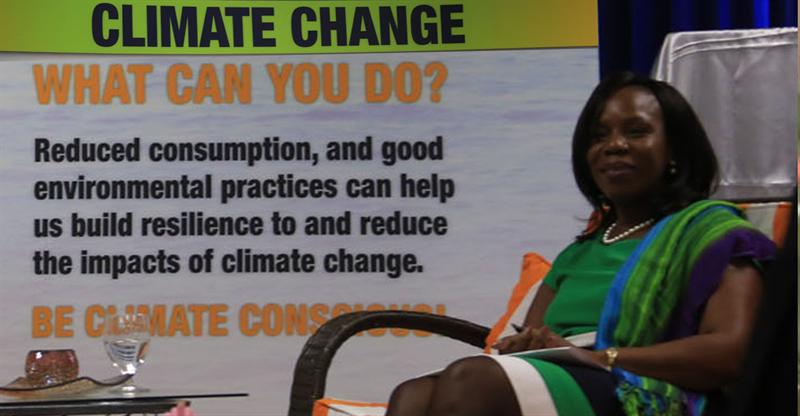 At a recent Climate Change and Natural Hazards Seminar in Kingstown, Saint Vincent, policymakers, government heads and experts from the Caribbean region convened to rally the region to action on climate change, in response to ongoing scientific research suggesting that climate change and climate variability trends are expected to worsen in the coming years.
“Some of the projected impacts will not only negatively impact the region’s main economic sectors, but is also expected to facilitate the spread of new health epidemics from vector-borne diseases,” the OECS Commission stated.
Consequently, the Climate Change Seminar seeks to provide strategies for managing disaster risks and vulnerabilities, and recommendations that will inform policies for building resilience to extreme events.
At the seminar, experts stressed that little will be achieved unless there is a significant shift in the behavioral patterns of Caribbean people to adapt to a changing future.
Dr. Paulette Bynoe, Director of the School of Earth and Environmental Science at the University of Guyana, asserted that climate change adaptation first lies in assessing the region’s vulnerability.
“The severity of the impact natural hazards—depending on their frequency, intensity, and impact—is based on the vulnerability of a society which can cause these hazards to evolve into a disaster. Now, based on the predications of climate change, one would expect more intense storms. So if we want to avoid a disaster, we have to address the issue of vulnerability,” she said.
Dr. Ulric Trotz, Deputy Director and Science Advisor of the Caribbean Community Climate Change Centre, known as the 5Cs, added that development must be regulated in the Caribbean for adaptation measures to be effective.
“The better we are prepared now for future extreme weather events, the more likely we, as a region, will be able to survive the projected impacts of climate change.”
The seminar was part of the OECS/USAID RRACC Project—a five-year developmental project launched in 2011 to assist OECS governments with building resilience through the implementation of climate change adaptation measures. It was held from Sep. 16 – 18.